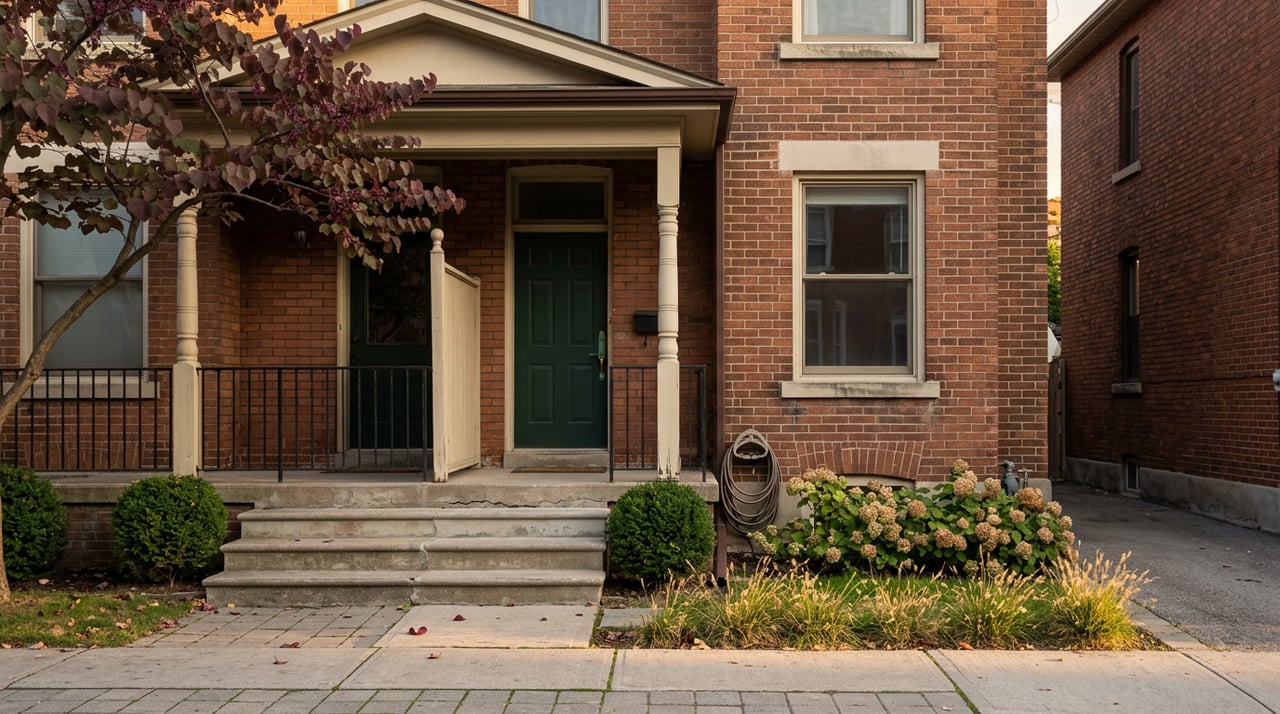
According to The Globe and Mail, in February 2026, a two storey semi just south of Greenwood Park went up for sale priced at $1,179,000, with a short window for showings before any offers would be considered. Thirty buyers came through within 48 hours. Two offers landed before the scheduled open house even happened. The house closed at $1.43 million, $251,000 over ask.
The Globe and Mail reported that a few months later, a two bedroom semi elsewhere in the same east-end pocket of Toronto went through its own offer night and came away with nothing. Four bids arrived. The sellers turned down every one.
Same listing agents, Shane Little and Jenny Simon of Sage Real Estate, working the same east-end territory that includes Leslieville, the Beaches and Riverdale. Same general run of the 2026 market. Opposite results.
If you're trying to decide whether Leslieville is currently a buyer's market or a seller's market, that contradiction is the more useful story than either headline alone. The neighborhood didn't turn hot in February and cold by June. Both houses were tested by the same pool of serious, financed, motivated buyers. What changed was how each listing was built, not how many people wanted to live there.
Same Agents, Two Opposite Results
Here is the plain comparison, stripped of narrative:
| 107 Hiltz Ave, near Greenwood Park | Semi-detached, Toronto east end | |
|---|---|---|
| Listed | February 2026 | Spring 2026 |
| Asking price | $1,179,000 | Priced to the seller's target |
| Viewing structure | Short pre-offer window, no early showings | Standard listing, scheduled offer night |
| Buyer response | 30 showings in 48 hours, 2 offers before the open house | 4 offers submitted |
| Outcome | Sold for $1.43 million, $251,000 over ask | All 4 offers rejected, home did not sell |
The buyers who showed up for the second house weren't weaker than the buyers who showed up for the first. Four offers on a semi is not a cold market. What was missing was a number the sellers were willing to accept, and a structure that told the market clearly what that number needed to be.
The Mechanism Behind the $251,000 Swing
Underpricing a house and giving buyers a tight deadline to act doesn't discount the property. It forces the market to reveal what it's actually willing to pay, fast. Shane Little, who listed 107 Hiltz Ave with Jenny Simon, said in The Globe and Mail that they set the listing up specifically "to generate interest and get someone to take action as quickly as we could." The strategy wasn't a guess. Little also noted that similar semis nearby had already been performing well, and that listing in February let them beat the wave of spring inventory that usually dilutes buyer attention across more competing homes. He mentioned locals have started calling the stretch near the park "market street," since the Leslieville market runs there nearly year round, which only adds to the walk up appeal once buyers are already primed to act.
The same mechanism showed up elsewhere in Leslieville in a month nobody expects it. One seller listed a starter semi in January, usually the quietest month for sellers all year, at true market value rather than a discount. It drew 58 showings and eight offers, and closed 20 percent over ask. Two different techniques, one underpriced with a compressed window, one priced at fair value with strong staging, produced the same outcome: real competition. Both numbers matched what buyers were already circling. Neither matched what a seller simply hoped to get.
When the Playbook Doesn't Work
As The Globe and Mail reported, the failed offer night in the east end wasn't the end of the story for Little and Simon. Their next listing, a three bedroom semi at 218 Bingham Ave in the Upper Beaches, used a different tactic entirely. A colleague had just sold a larger nearby home with six competing offers a few days earlier. Little reasoned that the five buyers who lost that bidding war were likely the most financially qualified people currently shopping that specific pocket, so he asked his colleague for their contact information and went directly to them rather than relaunching on the open MLS.
That decision only works with the kind of local knowledge that comes from tracking who is actually bidding on what, street by street. Relisting a stalled home the same way a second time usually produces the same silence. Reaching the specific buyers who already proved they wanted that pocket, and just lost, preserves urgency without asking the wider market to show up twice for the same house.
The Triplex That Waited Four Months
Pricing strategy isn't the only lever. As The Globe and Mail reported, a Victorian triplex at 59 Austin Ave sat on the market for four months in 2025, hampered by showings that had to be scheduled around two sitting tenants, on top of high borrowing rates and broader economic anxiety at the time. It had been listed at $1.95 million and then reduced to $1.9 million under a previous agent. A new agent, Jim Burtnick of Sotheby's International Realty Canada, relisted it this spring at $1,688,000, a cut of $212,000 from that prior asking price. Around the same time, one of the tenants moved out, which made showings noticeably easier. A dozen buyers booked tours within weeks, and the home sold to two couples who combined resources to buy it together, closing at $1,499,999.
Restricted access functions as a hidden price increase even when the listing number never changes. A buyer who can only view a home at limited times, around someone else's schedule, is effectively being asked to pay full price for a harder transaction. For anyone selling a tenanted duplex or triplex in Leslieville, viewing access deserves the same strategic attention as the asking price itself.
What the May 2026 Averages Actually Hide
As of May 2026, semi-detached homes across Toronto's inner core averaged $1,067,672, down 2.8 percent year over year, with freehold townhouses averaging $916,474, down 4.9 percent. Those are the numbers most buyers find first when they start comparing neighborhoods like Leslieville to the rest of the city. They describe a market softening at the edges.
They can't tell you why one house sold for a quarter million over ask the same year another one failed entirely. The average is a blend of homes where the pricing mechanism worked and homes where it didn't. It tells you where the market has been. It doesn't tell you which lever moved any single sale, which is exactly what matters if you're the one pricing the next listing on that street.
If You're Listing or Bidding on a Leslieville Semi This Fall
- Price to the recent comparables on your specific block, not to a number from a stronger market year or a neighbor's renovation budget. That's what made both the Hiltz Ave and January sales work.
- Decide your offer night structure before the listing goes live, not after showings start. A compressed pre-offer window only works when the price is already set to draw a crowd.
- If a home fails on offer night, resist relaunching the same way. The most qualified bidders who just lost a nearby bidding war may still be reachable directly.
- If the property is tenanted, treat showing access as part of the pricing conversation, not a separate logistics problem.
- The Globe and Mail reported that some sellers in the east-end market that includes Leslieville are following advice to list in the last week of August this year, aiming for an offer date around September 1, right as buyers return from vacation and just ahead of the usual fall wave of competing inventory.
FAQ
Does this mean bidding wars are back across Leslieville? Not universally. What the case studies above show is selective competition tied to pricing and access decisions, not a blanket return to 2021 conditions. A well priced, well presented home can still draw multiple offers in a slow month. A home priced to a seller's hoped for number, regardless of what the block just sold for, can fail even in a warm stretch.
Should I underprice my semi to try to trigger a bidding war? It worked at 107 Hiltz Ave, but only because the compressed timeline was paired with a price close to true comparable value and a home that showed well after recent updates. Underpricing without the comps or the presentation to back it up tends to invite lowball offers instead of competition.
Reading Leslieville's numbers side by side won't tell you which pricing game your specific street is playing this fall. If you want a read on your block, comparables and access included, Amanda Beecham is happy to walk through it with you. Let's Connect.