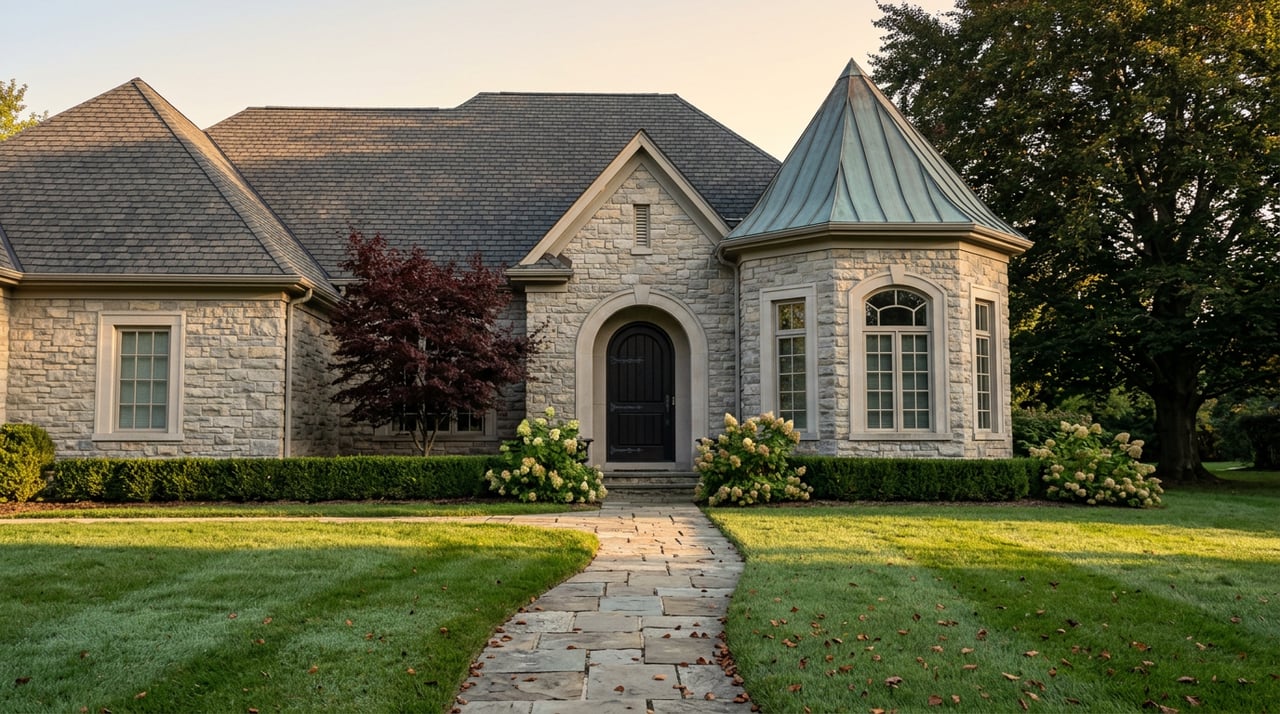
Say you signed an offer last November on a $3.4 million detached home in central Toronto. The price was locked. The mortgage was approved. Your lawyer had already worked out the land transfer tax, the single biggest closing cost after the down payment itself. Then something ordinary happened. A financing condition took an extra week. The sellers asked for more time to move out. Your closing date slid from March into April.
The house didn't change. The price didn't change. The tax bill did.
In Ontario, land transfer tax is triggered by the day a deal registers on title, not the day two parties sign an agreement. Toronto's new graduated municipal land transfer tax rates took effect for any transaction closing on or after April 1, 2026, regardless of when the offer was negotiated. A buyer who wrote an offer in 2025 under the old rate structure but closed a few weeks late paid the new one anyway.
That's the mechanical detail. The real story is what the tax was built to do versus what it actually does once you follow the money past city hall and across the 905 border.
What Changed, in Plain Numbers
Toronto has charged its own municipal land transfer tax on top of Ontario's provincial land transfer tax since 2008. That structure alone makes Toronto the only municipality in the province where buyers pay two separate transfer taxes on every purchase, luxury or not. The City of Toronto says its new graduated rate schedule, effective April 1, 2026, applies to properties containing one or two single-family residences priced above $3 million. NOW Toronto lists the new rates as follows:
| Purchase Price Portion | New Municipal Rate |
|---|---|
| $3M – $4M | 4.4% |
| $4M – $5M | 5.45% |
| $5M – $10M | 6.5% |
| $10M – $20M | 7.55% |
| Above $20M | 8.6% |
These are marginal rates, meaning each portion of the price is taxed at its own bracket, the same way income tax brackets work. Only the slice of the purchase price above each threshold gets the higher rate, not the whole transaction.
City staff projected the change would raise about $13.8 million in additional revenue in its first year and affect roughly 1,100 home purchases annually, a figure Mayor Olivia Chow put at 0.5 percent of buyers citywide. Council passed the motion 17 to 7.
The Vote Behind the Number
The debate at city hall is worth knowing because it shapes how the tax gets talked about, and that framing matters for anyone deciding whether it applies to them.
Chow's argument was straightforward: people buying homes above $3 million can absorb a bit more tax, and the revenue helps fund transit and affordable housing without raising property taxes on everyone else. Councillor Brad Bradford, who has since entered the race for mayor ahead of the October 26, 2026 municipal election, pushed back on the timing, calling out the political convenience of an affordability measure landing in an election year. Councillor Stephen Holyday opposed the increase on principle, arguing it singles out one group to fund services for another. The Toronto Regional Real Estate Board took a different angle entirely, warning in a public letter that repeated increases have made Toronto one of the most heavily taxed housing markets in North America and could discourage move-up buyers from trading one Toronto home for another, which tightens supply rather than loosening it.
Both sides were arguing about the same 0.5 percent. Neither side spent much time on the buyer who isn't in that bracket at all, but whose decision the tax quietly reshapes anyway.
Where the Pressure Actually Lands
Here's the detail that gets lost in the "tax on the wealthy" framing. Toronto is the only city in Ontario with a municipal land transfer tax. Mississauga, Vaughan, Markham, and Oakville don't charge one. Buyers there pay the provincial land transfer tax only, the same tax Toronto buyers also owe, just without Toronto's matching municipal layer stacked on top.
That gap exists at every price point, not just above $3 million. On a typical $1 million purchase, the difference between buying inside Toronto and buying in a neighboring municipality like Markham or Vaughan runs upward of $32,000, according to Tools.RealEstate's calculator. That's before the April 2026 luxury brackets enter the picture at all.
Now stretch that same math to the price range where the new brackets actually apply. A buyer comparing an equivalent detached home in central Toronto against one in Oakville's Joshua Creek or a growing pocket of Markham isn't just weighing square footage and commute times anymore. Above $3 million, the municipal tax gap is another part of that comparison. In Oakville, that municipal portion is zero. In Toronto, it's the largest single line item on the closing statement outside the down payment.
For an eight-figure buyer, that gap is a rounding error against the rest of the transaction. For a family selling a Toronto property to buy up into a $3.2 or $3.6 million home, whether that home sits in Leaside or in Oakville, the gap is real money that changes what's left over for a renovation, a mortgage buydown, or simply the size of the down payment itself.
That's the part the 0.5 percent framing misses. The tax was aimed at the buyer who barely notices it. Its structural effect is strongest on the buyer just below that ceiling, the one for whom Toronto and the 905 were genuinely comparable options until the number on the closing statement stopped being comparable at all.
What to Actually Run Before You Write an Offer
If you're shopping anywhere near the $3 million line, or comparing a Toronto property against an equivalent one in Oakville, Markham, or Whitby, a few things are worth confirming before you get attached to a number:
- Ask your lawyer to run both the provincial and municipal land transfer tax together on the full purchase price, not just the portion that falls into the new luxury bracket. The base MLTT still applies below $3 million, and it adds up faster than most buyers expect.
- If you're cross-shopping Toronto against a 905 municipality, treat the land transfer tax gap as a separate line item from the price difference between the homes themselves. They're two different numbers that happen to move in the same direction.
- Confirm the current rate structure before you write an offer near the threshold. Toronto raised these brackets once in 2023 and again for 2026, and TRREB has publicly pushed for the municipal rate to be tied to the provincial one, a change the province hasn't adopted. The brackets you're planning around today may not be the ones in effect on your closing date.
- Don't count on first-time buyer rebates to offset any of this. The City of Toronto's 2026 budget report says its municipal rebate has a maximum value of $4,475, which barely registers against a transaction at this price point.
A Few Questions Worth Settling Early
Does this tax apply to condos? The new brackets apply to properties containing one or two single-family residences, which covers detached and semi-detached homes and most freehold townhouses. It isn't structured around typical high-rise condo apartments the way it is around freehold houses.
Is this the only land transfer tax difference between Toronto and the 905? No. Toronto's municipal land transfer tax has applied to every purchase in the city since 2008, luxury or not. The April 2026 change only adjusted the graduated rates above $3 million. The baseline gap between Toronto and municipalities without a municipal tax at all existed long before this vote.
Could the rates change again? Toronto has increased these brackets twice now, in 2023 and again for 2026. Nothing about the current structure suggests it's permanent. Anyone planning a purchase near the threshold should confirm the rate in effect at the time they expect to close, not just the rate in effect when they write the offer.
The tax was sold as something that touches almost nobody. For the buyer deciding between a Toronto address and an equivalent home a few kilometers over the city line, it touches the math on every offer they write. If you're weighing that decision, whether it's a downtown property against a move to Oakville, Markham, or Whitby, Amanda Beecham can walk through what the full closing picture actually looks like for your specific price range before you commit to either side of the border.
This article is general information, not legal, tax or financial advice. Consult a qualified professional about your situation.