A buyer walks into a Yorkville showing with a number in her head. She has seen it on three portals and two market summaries: the Yorkville condo average sits around $1.22M, or roughly $1,196 to $1,270 per square foot as of Q2 2026. She has budgeted, stretched, and pre-approved against that number. Then her agent pulls up a listing at 50 Yorkville and quotes $3,200 per square foot, and the whole model collapses.
The number was not wrong. It was just the wrong number for the building she wanted. Yorkville in mid-2026 is not one market with an average. It is three decoupled markets sharing a postal code, and the acceleration in one tier is happening while another tier has effectively stopped trading. If you are comparing Yorkville to Rosedale, Forest Hill, or the Harbourfront on a single price-per-square-foot line, you are averaging two conversations that no longer talk to each other.
The thesis: in Yorkville right now, which tier you are bidding in matters more than your budget. It dictates whether your offer should be conditional or clean, how quickly the status certificate has to move, and whether "over asking" is a live risk again.
The friction most buyers only meet at offer time
Before the tiers, the transactional detail worth knowing. Every Yorkville condo purchase turns on the status certificate. It is the document that discloses reserve fund health, pending special assessments, and any litigation involving the condo corporation. In a stable Yorkville building the certificate is a formality. In a boutique heritage conversion on Hazelton, or an older Cumberland Street tower approaching a mechanical refresh, it is the entire deal.
In April and May of this year, offers with a 5-day status certificate condition were routine. That window is closing in the $2M to $3M tier, and knowing why requires understanding what changed.
Three Yorkvilles, one postal code
The neighbourhood is bounded by Bloor Street West, Davenport Road, Avenue Road, and Bay Street. Inside that rectangle the market splits cleanly along product type and price band.
| Tier | Typical range | Building examples | Mid-2026 posture |
|---|---|---|---|
| Resale condo, mid-market | ~$1,196–$1,270 psf; entry 1BR+den $1.1M–$1.8M | Broad resale inventory across Bay Corridor and Annex edges | Buyer-leaning, active selection |
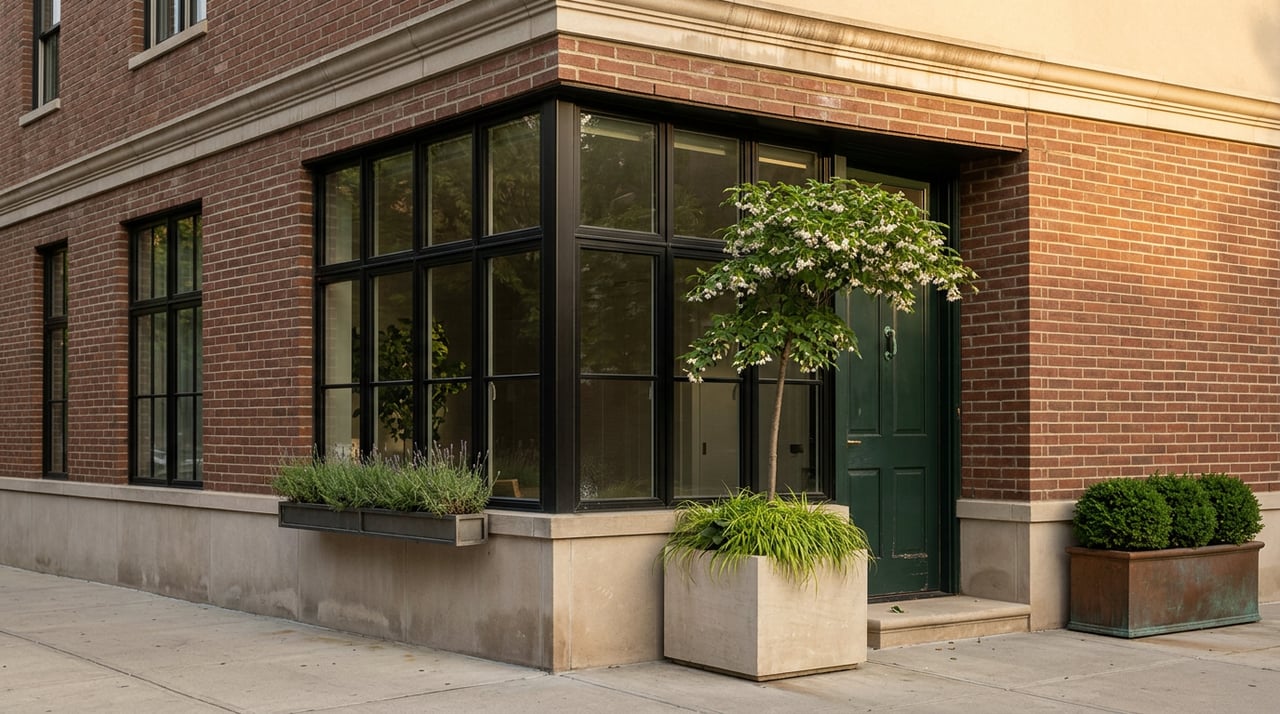
| Luxury condo, $2M+ | Mid-single-digit thousands psf | Four Seasons Private Residences at 55 Scollard, The Hazelton, 50 Yorkville, 10 Prince Arthur | Accelerating; competitive returned in May |
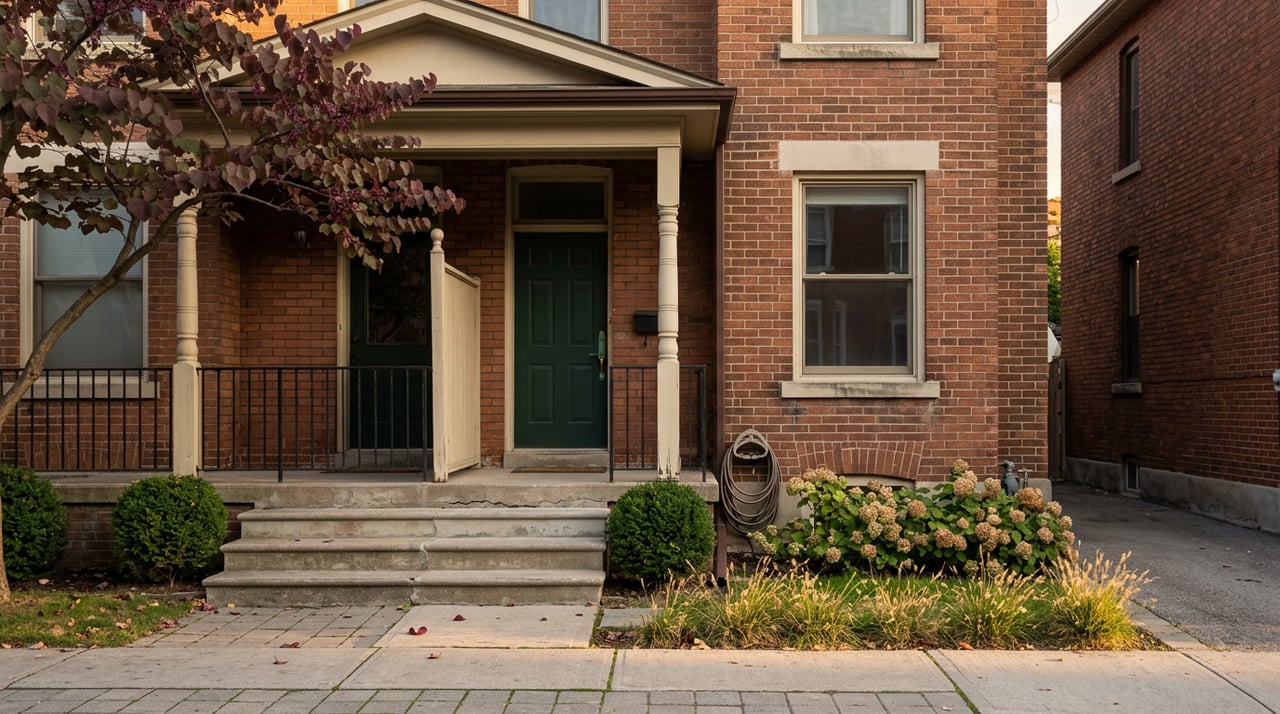
| Trophy penthouse & freehold | $3,000–$5,000+ psf on penthouses; townhouses $3–5M | Hazelton Avenue heritage townhouses; branded penthouses | Freehold $3M+ has not traded in five months |
The "$1,220" and the "$3,400,000" both come from Yorkville data pulled the same week. They are not measuring the same thing. Treating them as points on one distribution is where buyer strategy goes wrong.
Why the freehold line has gone quiet
Premium freehold in Yorkville, meaning ground-related properties above $3M, recorded zero transactions for five consecutive months through May 2026. That is not a soft patch. That is a segment that has stopped clearing.
A few forces are pressing on it at once. Toronto's April 2026 average sale price of $1,186,000 was down 1.8% year over year, and city-wide condo inventory reached a 15-year high last September and remains elevated. The Bank of Canada policy rate at 4.25% and five-year fixed mortgages near 5.04% do less damage to Yorkville freehold buyers, who tend to close cash-heavy or with large down payments, than they do to the psychology of trading up. Owners of $4M semis and heritage townhomes are not being forced to sell, and they are not seeing the comparable trades that would give them confidence in a list price. So they wait. The result is a market with strong asking prices, real buyers circling, and almost no closings.
For a seller sitting on Hazelton Avenue or the quieter Scollard blocks, this is the environment that rewards preparation over listing speed. For a buyer with the appetite and the liquidity, it is the tier where a well-structured, patient offer has the most room to be heard.
What changed in the condo tier in May
The $2M+ condo segment moved. Seven luxury condo transactions closed in May 2026 at an average of $3.40M, with total volume of $23.865M and a 99% average price achievement, the strongest month of the year. Three of the seven sold at or above list. One of them, 1166 Bay Street #2103, achieved 114% of asking through active buyer competition.
That last number is the one to sit with. Over-asking sales had been absent from Yorkville's luxury condo tier through the first four months of 2026. Their return in May is not a full-scale bidding-war environment. It is the early signal that the buyers who spent January through April negotiating from strength are now negotiating against each other in specific buildings.
At the same time, new condo sales across the GTHA fell 52% year over year in Q1 2026, a 35-year low. Yorkville is not being built into. The Mink Mile is not adding towers. 10 Prince Arthur, roughly 85% sold with occupancy in early 2025, is the kind of completion that validates the tier without expanding it. That combination, competitive absorption on top of a shrinking new-construction pipeline, is the setup that historically closes buyer windows first at the top.
How the tier changes the offer
The offer strategy that works in one Yorkville tier is the wrong strategy in the next one. A short, prioritized read:
- Mid-market resale, $1M to $1.8M. Days on market across Toronto sat near 17 in April, and the sales-to-new-listings ratio for downtown condos runs 40 to 44%, firmly buyer-leaning. Conditional offers are being accepted. A 5-business-day financing and status certificate condition is reasonable to ask for. Anchor your offer to psf inside the specific building, not to the neighbourhood average.
- Luxury condo, $2M to $3.5M in a named building. Assume competition on well-priced product. The 99% achievement in May means clean offers, tight condition windows, and a pre-ordered status certificate are again the price of admission. Floor, exposure, and view premiums inside the same building can widen the true psf by 30% or more, so appraise the suite, not the tower.
- Trophy tier and freehold above $3M. This is a relationship market. Off-market and pre-market activity does more work than MLS. Patience on both sides is rational. If you are the buyer, structure the offer around the seller's timeline and use the freehold freeze as context, not as leverage. If you are the seller, the answer is presentation and positioning, not price cuts.
Across all three tiers, the status certificate deserves earlier attention than most buyers give it. Ordering it the day you tour, not the day you write, is the single change that most often preserves an offer's timing advantage in the current market.
What the "average" is actually telling you
If you take one interpretive move away from this piece, take this one. The Yorkville average condo price is a useful benchmark for one thing: comparing the mid-market resale tier to other Toronto neighbourhoods over time. It is not a proxy for what a suite at Four Seasons Private Residences trades at, and it is not a proxy for what happens to a heritage townhouse on Hazelton Avenue in a quiet quarter. The averaging is what makes the number stable enough to publish. It is also what makes it misleading for buyers who are actually shopping in the tails.
Buyers who assume Yorkville is one market end up under-bidding in the tier that has quietly turned competitive and over-preparing for competition in the tier that has gone still. Sellers make the mirror-image error, pricing a $2.4M corner suite against a building down the street that is not comparable and then adjusting late.
FAQ
Is Yorkville a buyer's market or a seller's market right now? Both, in different tiers. Mid-market resale condos are buyer-leaning in line with the broader downtown core, where the sales-to-new-listings ratio sits at 40 to 44%. The $2M+ luxury condo tier moved to 99% price achievement in May with over-asking sales returning. Freehold above $3M has not cleared a transaction in five months.
Does the Toronto-wide condo correction apply to Yorkville? Partially. The correction is most visible in investor-grade studios and micro-units downtown, which are not the Yorkville product. Yorkville's luxury condo segment is less mortgage-sensitive, and the 2026 new-construction drop, down 52% year over year in Q1, tightens future supply in a district that was already supply-constrained.
What is the one document to read early? The status certificate. It discloses reserve fund position, pending special assessments, and any litigation. In older Yorkville boutique buildings and heritage conversions, it is where the real risk lives. Order it as soon as you have a shortlist, not after you have written the offer.
Working the right tier
Yorkville rewards buyers and sellers who know exactly which market they are in before they price the offer. If you are considering a purchase or a sale here in the second half of 2026, a short conversation about the specific building, block, and tier is more useful than any headline average. Amanda Beecham works this market at the suite level and can walk through what your budget actually buys, what a clean offer needs to look like in your target building, and how to time a listing against the tier it belongs to. Let's Connect.