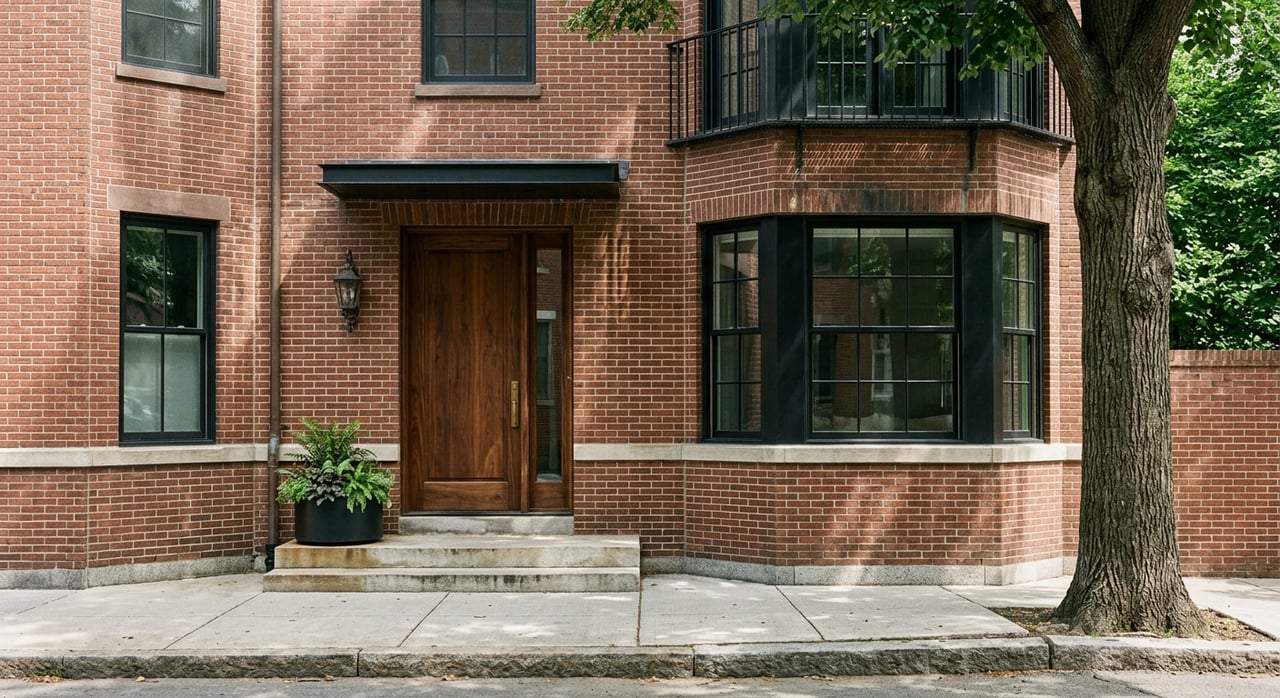
If you only know Yorkville by its luxury storefronts, you are missing what day-to-day life here actually feels like. For residents, Yorkville is not just a destination district. It is a compact downtown neighbourhood with heritage streets, useful local amenities, cultural institutions, and strong transit connections, all packed into a walkable area. If you are thinking about living in Yorkville, or you already do, this guide will help you understand the neighbourhood beyond the headline image. Let’s dive in.
What everyday life in Yorkville feels like
Yorkville works best when you think of it as a mixed-use downtown neighbourhood rather than only a shopping district. According to the City of Toronto’s heritage planning materials, the Village of Yorkville was incorporated in 1853 and developed with a strong historic street pattern that is still visible today.
That history matters because it shapes how the area feels on foot. Some blocks are busy and polished, while others feel quieter and more residential. The streets around Hazelton Avenue, in particular, reflect more of Yorkville’s older street-scale character, which helps balance the activity of the nearby retail corridors.
Yorkville is compact and walkable
One of Yorkville’s biggest strengths is how much you can do without going far. The Bloor-Yorkville BIA listing from the City of Toronto describes a concentrated district with hundreds of businesses across a relatively small footprint.
That density creates convenience in real life. You can step out for coffee, pick up a few essentials, meet a friend for dinner, and handle certain appointments without planning your whole day around travel. The area remains destination-oriented, but for residents, that same concentration can make daily routines more efficient.
Heritage streets add contrast
Yorkville’s public image often focuses on high-end retail, but the neighbourhood has a much older layer. The City’s heritage district information notes that the Yorkville-Hazelton area still includes 19th-century housing forms built close to the street, with original homes along Hazelton Avenue and nearby blocks linking the area to its past.
In practical terms, that means Yorkville offers more texture than many people expect. You are not only surrounded by commercial activity. You also have pockets where the streetscape feels more grounded, more intimate, and more connected to the neighbourhood’s early development.
Daily amenities that anchor the area
A neighbourhood feels livable when it has more than restaurants and retail. Yorkville has several everyday anchors that help support daily routines, especially for people who value walkability and nearby public spaces.
Yorkville Branch Library
The Yorkville Branch of Toronto Public Library at 22 Yorkville Avenue is one of the area’s most useful civic amenities. Toronto Public Library lists the branch as wheelchair accessible and offering free Wi-Fi, making it a practical stop for reading, studying, working, or simply taking a quiet break.
It also adds to Yorkville’s sense of continuity. The branch history notes the building’s heritage significance, and the City identifies it as the 1906-07 Northern Branch of the Toronto Public Library. That blend of daily use and historic character is very much in line with how Yorkville functions overall.
Village of Yorkville Park
When you want fresh air without leaving the neighbourhood, Village of Yorkville Park at 115 Cumberland Street is one of the most recognizable public spaces nearby. The City describes it as a unique urban green space that transformed a former parking lot into a landscape reflecting both local history and Canada’s geography.
It is not a large park, but it plays an important role in everyday life. In a dense downtown setting, even a smaller public space can offer a place to pause, sit, or reset between errands and meetings. That matters more than square footage alone.
Queen’s Park nearby
If you want more open space, the City describes Queen’s Park as the largest green space in Toronto’s downtown core. Its proximity gives Yorkville residents access to a more expansive outdoor option without needing to travel far.
This is one of Yorkville’s practical advantages. You get the convenience of a dense urban district while still being close to meaningful public green space.
Dining and culture are part of the routine
Yorkville’s lifestyle appeal is not just about appearance. It is also about how easy it is to build dining, coffee, and culture into your week.
The Royal Ontario Museum’s Yorkville guide describes the neighbourhood as lined with art galleries, artisanal coffee shops, boutiques, and a strong food scene. That aligns with what many residents value most: not just access to places to go, but access to variety within a short walk.
The neighbourhood also benefits from nearby cultural institutions. In addition to the ROM, the Gardiner Museum at 111 Queen’s Park adds another arts-focused destination close to Yorkville. For residents, that means weekday and weekend plans can feel easy and local, rather than heavily scheduled.
Yorkville also handles practical errands
A neighbourhood can look great on paper but still feel inconvenient if basic services are far away. Yorkville is stronger than many people assume on that front.
The City and BIA describe the district as including restaurants, galleries, spas, and health-care providers. That mix means some routine needs can be handled locally, which is an important part of what makes the area work for full-time residents and not just visitors.
Transit is a major advantage
For many buyers and sellers, transit access is a big part of Yorkville’s value. The neighbourhood is well connected, especially for people who want to move easily across downtown and the rest of Toronto.
The TTC’s Bay Station page lists Bay Station as accessible and connected to nearby surface routes. For Yorkville residents, that makes Bay a straightforward Line 2 anchor for everyday commuting and city access.
Bloor-Yonge Station is another major part of the local transit picture. According to the TTC, it is the busiest station in the system and is undergoing major capacity improvements, including a new Line 2 platform, expanded Line 1 platforms, a new barrier-free entrance, and additional elevators, escalators, and stairs.
The trade-off: convenience and construction
There is an honest way to talk about Yorkville transit, and it includes both the upside and the trade-offs. Access is excellent, but major infrastructure work around Bloor-Yonge means construction activity and commuter pressure are part of the current reality.
If you live nearby, that may affect how certain blocks feel during peak periods. If you are buying or selling in the area, it is worth understanding that strong long-term connectivity can come with short-term inconvenience. Framing that clearly helps set realistic expectations.
Why Yorkville appeals to full-time residents
Yorkville attracts attention for its profile, but its staying power comes from livability. The neighbourhood offers a combination that is hard to replicate: heritage character, dense amenities, public institutions, cultural access, and transit, all within a small downtown footprint.
That does not mean every street feels the same. Some parts are busier, more retail-driven, and more active throughout the day. Others, especially near the historic residential pockets, feel calmer and more rooted in the area’s original scale.
For many people, that contrast is the appeal. You can enjoy a high-amenity urban lifestyle while still finding blocks that feel more like a neighbourhood than a commercial zone.
What to keep in mind if you are moving here
If Yorkville is on your shortlist, it helps to think beyond the branding. The real question is how you want your daily routine to work.
You may appreciate Yorkville if you value:
- A walkable downtown setting
- Easy access to dining and coffee spots
- Nearby cultural institutions
- Public spaces within reach
- Strong subway access
- A neighbourhood with both heritage character and ongoing evolution
You may want to look more closely at specific blocks if you are sensitive to:
- Heavy pedestrian activity
- Construction near major station corridors
- The difference between quieter side streets and busier retail streets
That kind of block-by-block understanding is where local insight matters most. In a compact area like Yorkville, small location differences can shape your everyday experience.
Yorkville’s identity is more balanced than its reputation
The clearest way to describe Yorkville is as a heritage-sensitive, high-amenity downtown district with real residential pockets. That picture is supported by the City of Toronto, the TTC, Toronto Public Library, and the ROM.
So if you are trying to decide whether Yorkville fits your lifestyle, it helps to look past the surface image. This is a neighbourhood where history, walkability, culture, and change all exist side by side.
If you are considering a move to Yorkville, buying a condo nearby, or planning a sale in central Toronto, working with a local advisor can help you compare buildings, streets, and daily lifestyle trade-offs with more clarity. To talk through your options, connect with Amanda Beecham.
FAQs
What is everyday life in Yorkville Toronto really like?
- Everyday life in Yorkville is shaped by walkability, dense amenities, heritage streets, nearby parks, cultural institutions, and strong transit access.
Is Yorkville Toronto only a luxury shopping area?
- No. While Yorkville is widely known for retail and dining, official city and heritage sources show it is also a mixed-use neighbourhood with residential pockets and civic amenities.
Are there parks and green spaces near Yorkville Toronto?
- Yes. Village of Yorkville Park is a key local green space, and Queen’s Park is nearby and described by the City as the largest green space in downtown Toronto.
How good is transit in Yorkville Toronto?
- Transit access is excellent, with Bay Station serving as an accessible Line 2 connection and Bloor-Yonge Station offering major network access.
Is construction affecting Yorkville Toronto transit access?
- Yes. The TTC is carrying out major improvement work at Bloor-Yonge Station, so residents should expect ongoing construction activity and commuter pressure in that area.
What makes Yorkville Toronto appealing for residents?
- Yorkville appeals to many residents because it combines downtown convenience, cultural access, heritage character, public amenities, and compact walkability in one neighbourhood.