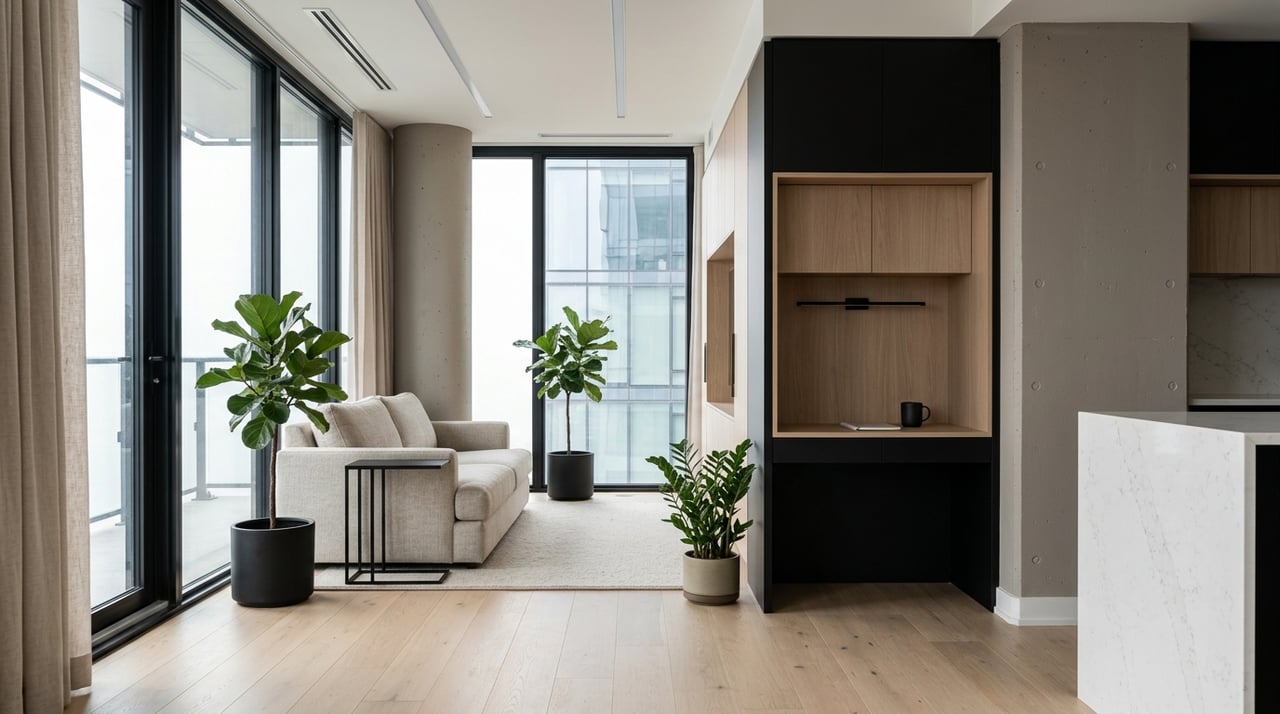
If you work from home full-time or split your week between home and the office, where you live shapes more than your commute. In Harbourfront, the question is not just whether you can work remotely. It is whether you want your workday to include lake views, walkable coffee stops, quick transit access, and easy outdoor breaks. If that mix sounds appealing, Harbourfront deserves a close look. Let’s dive in.
Why Harbourfront suits remote work
Harbourfront stands out because it supports a lifestyle-based version of remote work. You are not tucked away in a quiet residential pocket far from the city. Instead, you are living in a downtown waterfront area built around working, recreation, and day-to-day convenience.
That matters in a market where hybrid and work-from-home routines are still relevant. Statistics Canada reported that in May 2026, 9.8% of employed Canadians had hybrid arrangements and 11.4% worked exclusively from home. For many buyers, that means home no longer needs to function only as a place to sleep between office days.
Waterfront Toronto also frames the area around accessibility, activity, living, working, and recreation. In practical terms, Harbourfront works best when you want your home office to connect to the city instead of feeling separate from it.
Transit makes hybrid life easier
One of Harbourfront’s biggest strengths is access. According to the Waterfront BIA, the waterfront is about a five-minute walk from Union Subway Station, and you can reach the area by foot, bike, bus, streetcar, or PATH.
Waterfront Toronto describes Queens Quay as the waterfront’s main street and notes that it is about a 10-minute walk to Union Station. The street also includes a dedicated LRT lane, a broad pedestrian promenade, and direct access to the Martin Goodman Trail. If you need to head into the Financial District for meetings, that convenience matters.
For hybrid workers, this setup can remove a lot of friction from office days. You can leave home, get downtown quickly, and still return to a neighborhood that feels more open and lifestyle-focused than many core blocks.
Current TTC service notes
Transit in Harbourfront is strong, but service patterns can shift during major events or construction. As of June 7, 2026, the TTC has temporarily adjusted service for FIFA World Cup 2026, including changes to the 510 Spadina streetcar and continued service to Union via the 509 Harbourfront streetcar.
That does not change the area’s long-term transit appeal, but it does mean your day-to-day route may look a little different right now. If you rely on transit often, it is smart to check current service details as part of your home search.
Condo living can support your workday
In Harbourfront, condo features are a big part of the remote-work conversation. For many buyers, the right building matters almost as much as the right suite layout.
Current condo listing pages show that many Harbourfront towers offer amenities that fit a hybrid lifestyle well. These can include concierge service, meeting rooms or business centres with Wi-Fi, gyms, rooftop terraces or sundecks, party rooms, pools, wellness spaces, and bike storage.
That variety gives you options throughout the day. You may work from your unit most of the time, then take a call from a quieter building space, fit in a workout between meetings, or reset on a terrace before finishing the afternoon.
What to look for in a Harbourfront condo
If remote work is a priority, focus on features that support your routine, such as:
- A layout with room for a dedicated desk or office nook
- Building amenity spaces that can supplement your suite
- Bike storage if you plan to use the waterfront trails often
- Concierge service for convenience during busy workweeks
- Outdoor space, whether private or shared
- Easy walking access to transit and coffee spots
For condo buyers, this is where building-level expertise becomes especially valuable. Two suites in the same area can feel very different depending on layout, noise exposure, and amenity quality.
Cafés help break up the day
A good remote-work neighborhood usually has more than one reliable coffee option. Harbourfront checks that box.
The Waterfront BIA lists Boxcar Social Waterfront at 235 Queens Quay West, Music Garden Cafe at 466 Queens Quay West, and Mos Mos Coffee at 20 Bay Street. These nearby spots give you simple ways to add structure and variety to your workday without turning a coffee run into a major outing.
That may sound small, but it matters. When you work from home, having easy places to step out for coffee, lunch, or a quick reset can make your day feel more balanced and sustainable.
Breaks are one of Harbourfront’s biggest perks
One of the clearest advantages of remote living in Harbourfront is how easy it is to step away from your screen. The neighborhood is designed in a way that supports short, meaningful breaks.
Love Park at York and Queens Quay is described by Waterfront Toronto as a calm urban refuge and flexible public space for office workers, residents, and visitors. It offers exactly the kind of nearby green space that can turn a 15-minute break into a real reset.
You also have access to Sugar Beach and the Toronto Music Garden. Sugar Beach transformed a former parking lot into Toronto’s second urban beach, while the Toronto Music Garden adds a cultural and visual change of pace. If you do your best thinking after a short walk, Harbourfront gives you that option almost on demand.
Outdoor movement during the workday
Harbourfront is especially appealing if you like to move between meetings. The Waterfront BIA highlights activities such as kayaking, canoeing, stand-up paddleboarding, and bike rentals, along with the Martin Goodman Trail.
The trail is described as a 22-kilometre waterfront route where you can bike, jog, walk, or rollerskate with lake views. For remote workers trying to break up screen time, that kind of access is a real quality-of-life advantage.
After-work convenience adds value
Working from home is easier when your neighborhood still feels lively after 5 p.m. Harbourfront offers that balance well.
Harbourfront Centre highlights festivals, music, exhibitions, and food programming, along with dining and casual stops such as Amsterdam Brewhouse, Boxcar Social Waterfront, Bobby Bermuda’s Sunset Bar, Queens Harbour, Gus Tacos, and Lisa’s Ice Cream. That means lunch, post-work dinner, or a casual evening out can all happen close to home.
For many buyers, this is part of the appeal. You are not only choosing where you will answer emails. You are choosing how easy it is to enjoy your neighborhood once the laptop closes.
The lifestyle is a major draw
Harbourfront feels different from many downtown neighborhoods because the public realm was designed to support everyday use. Waterfront Toronto’s Queens Quay revitalization added a dedicated LRT lane, widened sidewalks, tree-lined promenades, and direct connections to the Martin Goodman Trail.
That design makes the area feel more walkable and more intentionally set up for living. You still have downtown access, but the day-to-day atmosphere is more open and scenic than a purely functional office district.
For buyers who want a home that fits both work and lifestyle, this can be a strong match. You are getting city convenience without giving up the waterfront experience.
Trade-offs to consider before you buy
Harbourfront is not ideal for everyone. Its strengths are very specific, and so are its compromises.
The area is active and well-visited. Harbourfront Centre draws more than 12 million visitors a year, and Waterfront Toronto describes this part of the waterfront as one of the busiest on Toronto’s central waterfront. That energy can feel exciting, but it may not suit you if your top priority is a quiet home office environment.
The neighborhood is also still evolving in places. New nearby public-space projects include Rees Street Park and Spadina Pier, which is a positive sign for long-term livability but can also mean some blocks still feel in transition.
If you are imagining total privacy, detached-home quiet, or a car-first routine, Harbourfront may not be the best fit. If you want walkability, lake access, and a workday with easy built-in variety, it may be exactly what you are looking for.
Who Harbourfront fits best
Harbourfront is often a strong fit for buyers who want their home office to be part of a broader downtown lifestyle. That usually includes people who value:
- Quick access to Union Station and the core
- Condo living with amenity support
- Walkable coffee and lunch options
- Outdoor breaks by the lake
- A neighborhood that feels active and connected
It is less ideal if you want a quieter, low-traffic residential setting. The key is being honest about how you work best and what kind of environment helps you stay productive.
Final thoughts on Harbourfront living
For the right buyer, Harbourfront can be one of Toronto’s most appealing remote-work neighborhoods. It combines downtown access, condo convenience, strong public spaces, and a waterfront setting that makes everyday routines feel lighter.
The real question is not whether Harbourfront supports remote work. It does. The better question is whether you want your work-from-home life to feel calm, connected, and active rather than secluded. If that is your goal, Harbourfront is well worth considering.
If you are comparing Harbourfront condos or trying to decide whether this waterfront lifestyle fits your routine, Amanda Beecham can help you narrow down the buildings, layouts, and trade-offs that matter most.
FAQs
Is Harbourfront in Toronto good for full-time remote work?
- Yes, Harbourfront can work very well for full-time remote work if you want walkability, cafés, outdoor space, and condo amenities rather than a quiet, tucked-away residential setting.
Is Harbourfront in Toronto good for hybrid workers?
- Yes, Harbourfront is especially convenient for hybrid workers because it is close to Union Station and has strong access by foot, bike, streetcar, and PATH.
Are Harbourfront condos in Toronto well suited for working from home?
- Many Harbourfront condo buildings offer amenities that can support working from home, including concierge service, business or meeting spaces, fitness areas, rooftop terraces, and bike storage.
Is Harbourfront in Toronto too busy for a home office?
- It can be, depending on your preferences, because the area is active, event-driven, and heavily visited compared with quieter residential neighborhoods.
What makes Harbourfront in Toronto attractive for remote workers?
- The biggest draws are waterfront access, short coffee runs, easy transit, nearby parks, the Martin Goodman Trail, and a neighborhood design that makes breaks and after-work time easy to enjoy.
Is Harbourfront in Toronto still changing as a neighborhood?
- Yes, nearby public-space projects such as Rees Street Park and Spadina Pier show that parts of the area are still evolving, which can be a benefit for buyers who like improving public spaces over time.